The chin is the architectural anchor of the lower face — a structure that determines how the jawline reads in profile, how the lips and lower lip-chin transition appear, how the neckline contours from below the jaw, and how the entire face balances when viewed straight on. Genioplasty is the surgical correction of chin projection, length, width, or asymmetry, performed either through repositioning of the patient’s own chin bone (osseous or “sliding” genioplasty) or through placement of a precisely sized chin implant over the existing bone (alloplastic genioplasty). Each technique addresses a different anatomical problem — and the right choice depends entirely on whether the patient’s underlying skeletal structure needs to be moved, augmented, or both. A surgeon who understands how the chin bone sits within the broader mandible, how the muscles of the lower face anchor to it, and how the lower teeth relate to chin projection is positioned to recommend the procedure that will produce the most natural, durable result.
Dr. David Salehani is a board-certified oral and maxillofacial surgeon whose dual training in dentistry and medicine provides the skeletal anatomy expertise that distinguishes a true osseous genioplasty surgeon from a cosmetic provider who only places implants. With a Doctor of Dental Surgery earned with honors from State University of New York at Stony Brook and a Doctor of Medicine from Stony Brook School of Medicine, followed by a full oral and maxillofacial surgery residency at Long Island Jewish Medical Center and a general surgery internship at Stony Brook University Hospital, Dr. Salehani performs both sliding genioplasty — the bony repositioning technique that requires formal jaw surgery training — and alloplastic chin implant placement, with the same Virtual Surgical Planning (VSP) technology he uses for orthognathic jaw surgery. He serves as faculty at UCLA Medical Center, has held a seat on the peer review board of the Los Angeles Dental Society for over seven years, and is past president of the Beverly Hills Academy of Dentistry — credentials that allow him to evaluate whether a patient is best served by a custom silicone implant, a sliding genioplasty, a combined orthognathic procedure, or a non-surgical alternative such as Juvederm.

What Is a Chin Implant?
A chin implant, also known as genioplasty, focuses on refining facial contours, especially around the chin, neck and jawline. Typically, this surgical procedure involves placing an implant around the patient’s existing chin bone to modify its size and shape. A similar approach is taken for the jawline. Implants utilized beneath the skin are commonly crafted from silicone or polyethylene.

The primary objective of these implants is to establish a more seamless transition between facial features and the neck, fostering enhanced symmetry. When executed by a specialist like Dr. Salehani, this method becomes a lasting solution, offering enduring improvements to your facial profile. Some of the benefits include:
- Improved Facial Proportion: Chin implants help create a more proportionate and balanced facial profile, enhancing facial harmony.
- Enhanced Definition: The procedure can refine the chin’s contours, strengthening the jawline and providing a more defined chin appearance.
- Customizable Results: Chin implants come in various sizes and shapes, allowing for personalized adjustments to meet individual aesthetic preferences.
The process begins with a thorough consultation with our board-certified oral and maxillofacial surgeon. Dr. Salehani evaluates the patient’s facial structure, discusses aesthetic goals, and formulates a personalized treatment plan.
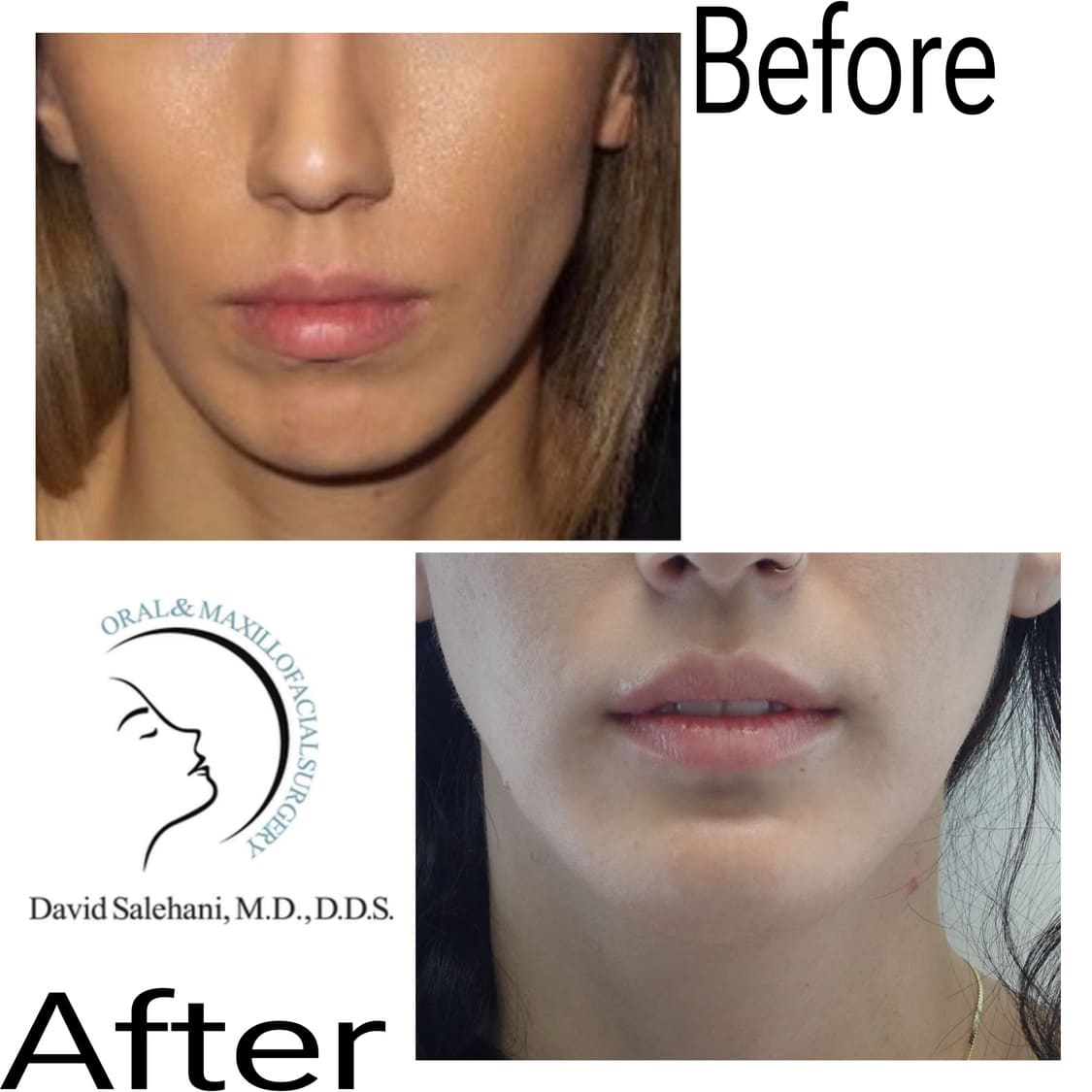
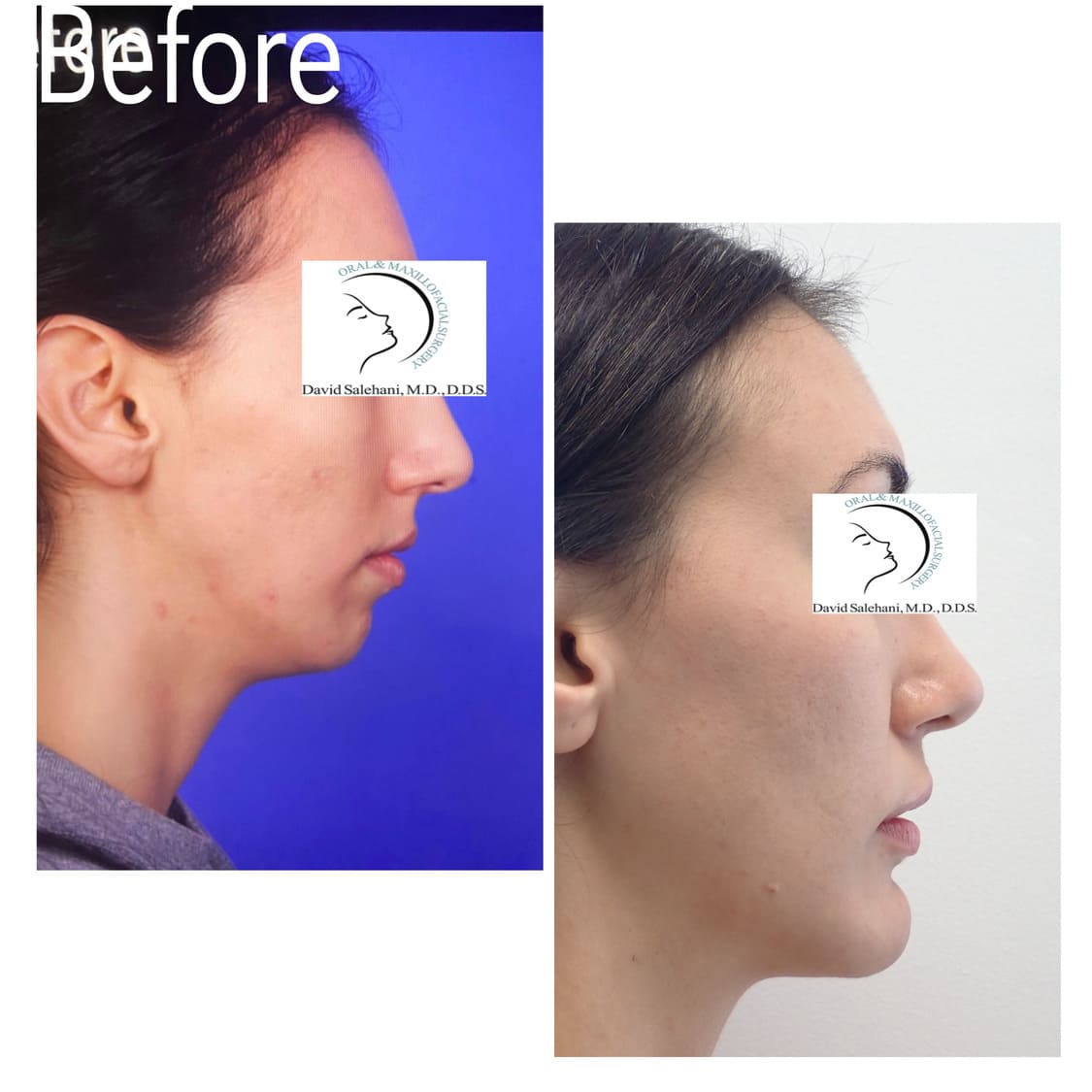
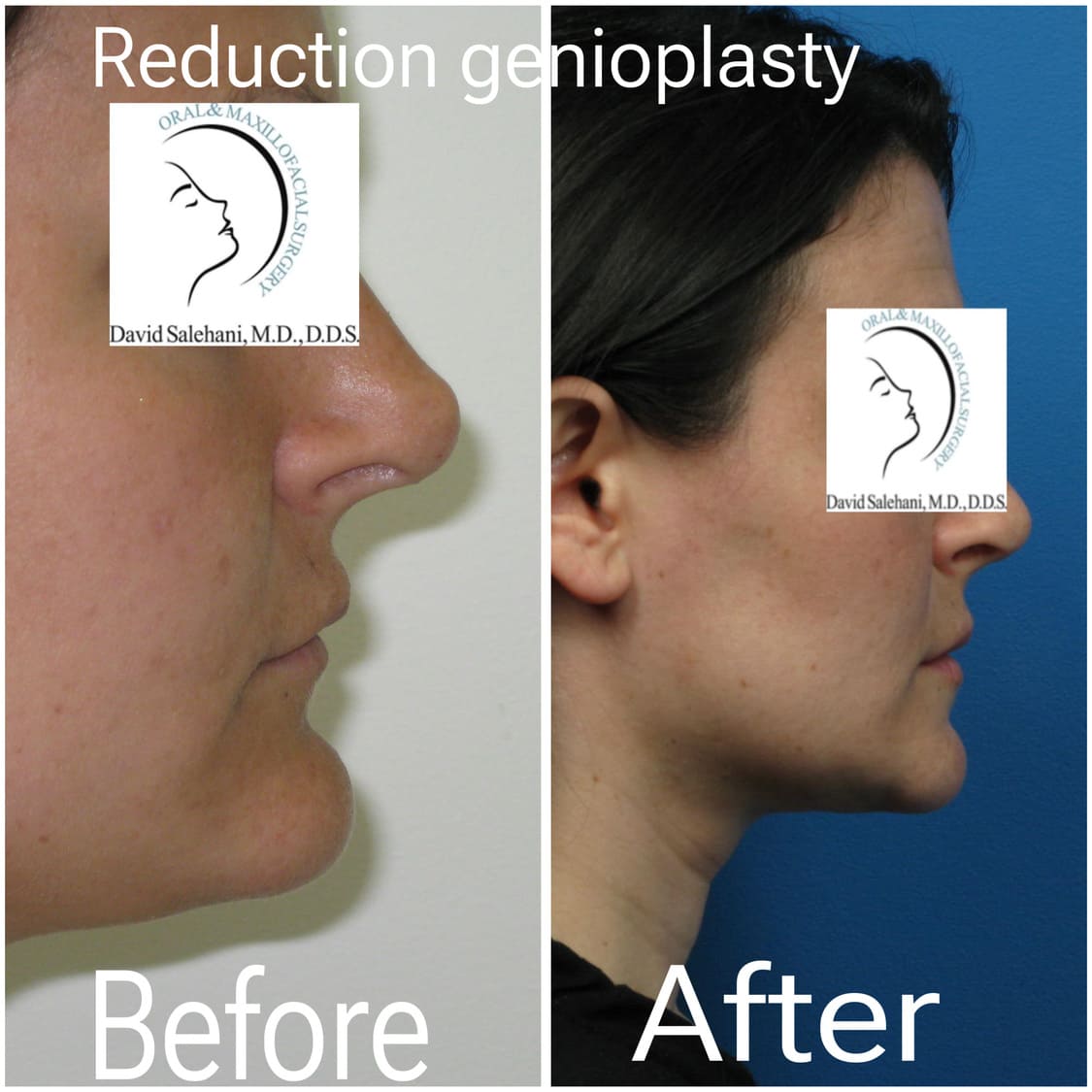
Before & After Genioplasty Results

Genioplasty Procedure
Chin implant surgery is typically performed under local anesthesia with sedation or general anesthesia. Dr. Salehani creates a small incision either inside the mouth or beneath the chin to access the chin bone and carefully inserts the chosen implant—usually made of silicone—around the existing chin bone to achieve the desired augmentation or reshaping. The implant is positioned securely to ensure stability and natural-looking results. Following implant placement, the incisions are meticulously closed with sutures.
Dr. Salehani utilizes Virtual Surgical Planning (VSP) for corrective jaw and chin surgeries (genioplasty), which significantly reduces operating time, lowers surgical costs, and shortens recovery time for patients. By using VSP, jaw position and movement can be precisely planned and executed, leading to highly accurate and predictable outcomes.
Virtual Surgical Planning (VSP) for Genioplasty
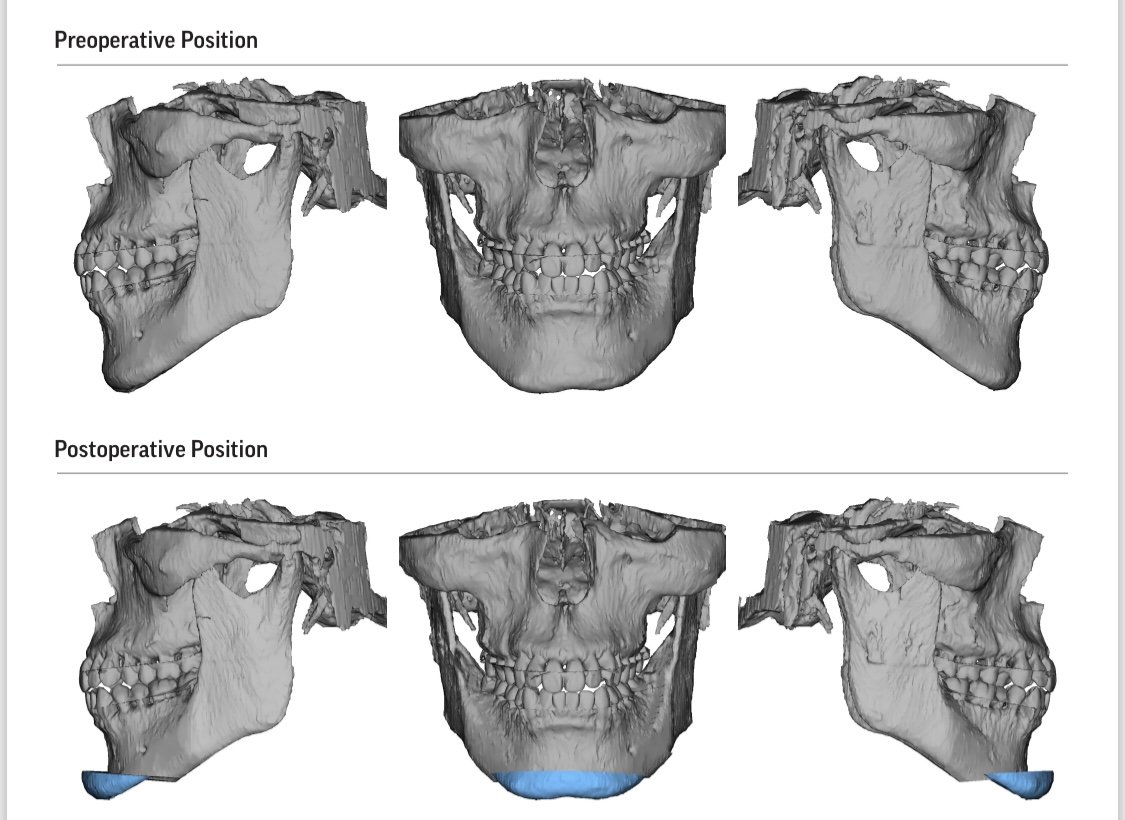
Bone Simulation
Simulation of jaw bone movement before and after surgery.
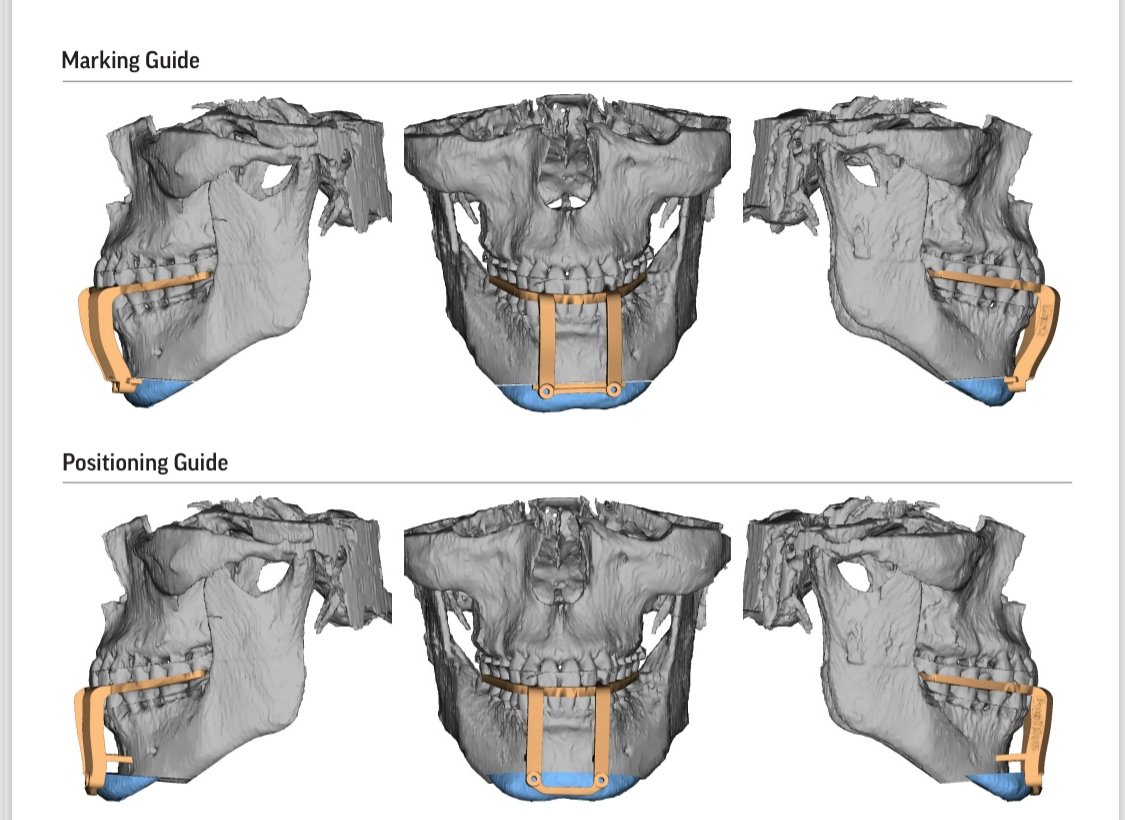
Marking and Positioning
Surgical guides used for precise marking and positioning during surgery.
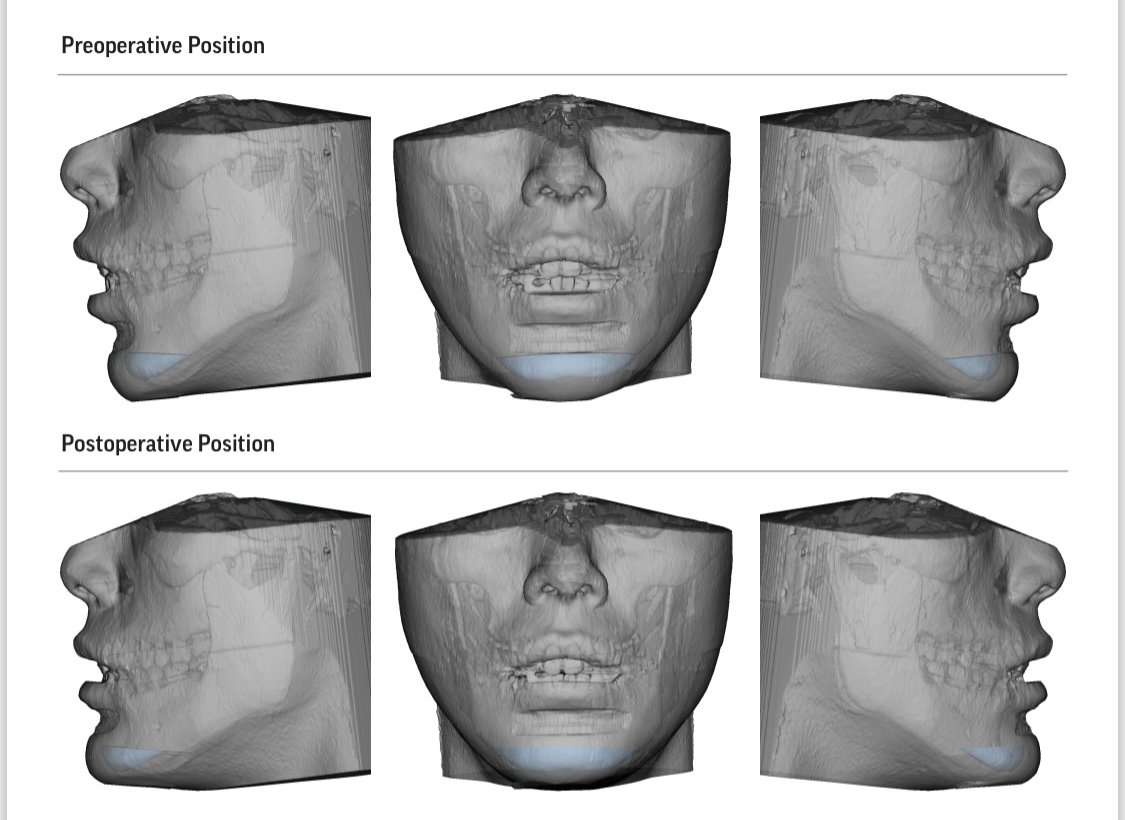
Before and After
Full 3D model of the lower face showing planned and achieved surgical outcomes.
Frequently Asked Questions About Genioplasty
What is the difference between a chin implant and a sliding genioplasty?
A chin implant places a precisely sized silicone or polyethylene device over the existing chin bone to add projection or width, while a sliding (osseous) genioplasty cuts the chin bone itself and repositions it forward, backward, up, or down — the implant approach is simpler and reversible, while the bony approach can address more complex deformities including chin asymmetry, vertical excess, or significant retrusion that an implant alone cannot correct.
Will I have a visible scar?
No — the incision for both chin implant placement and sliding genioplasty is typically made inside the mouth (intraorally), behind the lower lip, leaving no external scar — in select cases an external incision beneath the chin may be used, which heals as a thin, well-camouflaged line within the natural shadow of the chin.
What is Virtual Surgical Planning and why does it matter?
Virtual Surgical Planning (VSP) uses a 3D scan of the patient’s face and skull to plan the exact movement of the chin bone or position of an implant before surgery, with custom surgical guides fabricated to execute the plan precisely in the operating room — the result is shorter operating time, lower surgical cost, and more predictable outcomes than freehand techniques.
How long does the recovery take?
Most patients experience swelling and bruising for one to two weeks, return to non-strenuous work within seven to ten days, and reach the majority of their final result by four to six weeks — for sliding genioplasty, the bone is fully healed at six to eight weeks, with the final aesthetic result settling over three to six months.
Can genioplasty be combined with other procedures?
Yes — genioplasty is frequently combined with orthognathic jaw surgery for patients who need correction of the entire jaw skeleton, with facial implants in adjacent areas such as the jaw angles, with FaceTite for soft-tissue tightening, or with Botox to relax the chin dimpling that some patients develop with mentalis muscle hyperactivity.
Am I a candidate for genioplasty?
Adults with a recessed, overprojecting, asymmetric, or vertically excessive chin who feel their facial profile is unbalanced are typically excellent candidates — the consultation includes a profile analysis, dental occlusion evaluation, and 3D imaging to determine whether an implant, a sliding genioplasty, or a combined jaw procedure will produce the result that matches the patient’s anatomy and goals.

Schedule Your Chin Implant Consultation in West Hollywood
Patients may experience mild swelling, bruising and discomfort post-surgery, which usually subsides within a few weeks. It is essential to follow the post-operative instructions diligently for optimal healing.
At Sunset Oral and Facial Surgery, Dr. Salehani and our staff utilize advanced techniques to deliver tailored chin implant procedures, striving to achieve natural-looking results that enhance facial aesthetics and boost confidence. To learn more about chin implants and how they can reshape your face, contact our clinic in West Hollywood, CA.